
Antibiotics are agents that either kill bacteria (bactericidal) or inhibit their growth (bacteriostatic). Their therapeutic success depends on selective toxicity — targeting structures or biochemical pathways unique to bacteria.
Human cells lack:
Peptidoglycan cell walls
70S ribosomes
Bacterial DNA gyrase
Folic acid synthesis pathway
These differences allow targeted drug therapy without harming host cells.
Understanding antibiotics becomes much easier when organized by site of action rather than memorizing drug names.
I. Inhibitors of Cell Wall Synthesis

The bacterial cell wall is composed of peptidoglycan, a rigid structure formed by glycan chains cross-linked by peptides. Disruption of this structure leads to osmotic instability and bacterial lysis.
1. Beta-Lactam Antibiotics
Mechanism
Beta-lactams bind to penicillin-binding proteins (PBPs), inhibiting transpeptidation (cross-linking of peptidoglycan chains). This weakens the cell wall and causes cell rupture.
They are bactericidal and most effective against actively dividing bacteria.
A. Penicillins
Examples:
Penicillin G, Amoxicillin, Ampicillin, Piperacillin
Clinical Notes:
Penicillin G → Syphilis
Amoxicillin → Otitis media, sinusitis
Piperacillin → Pseudomonas coverage
Adverse Effects:
Allergic reactions (rash to anaphylaxis)
B. Cephalosporins
Examples by Generation:
1st Gen: Cefazolin (good gram-positive coverage)
3rd Gen: Ceftriaxone (strong gram-negative coverage)
5th Gen: Ceftaroline (covers MRSA)
Each generation progressively increases gram-negative coverage.
C. Carbapenems
Examples: Imipenem, Meropenem
Broad-spectrum and resistant to many beta-lactamases. Used in severe hospital-acquired infections.
2. Glycopeptides
Vancomycin
Binds directly to D-Ala-D-Ala terminal of peptidoglycan precursors, preventing cell wall synthesis.
Clinical Importance:
Drug of choice for MRSA and serious gram-positive infections.
II. Protein Synthesis Inhibitors
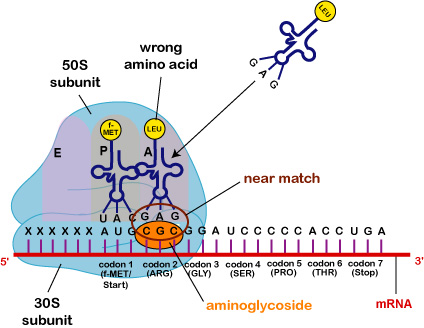
1. 30S Subunit Inhibitors
Aminoglycosides
Examples: Gentamicin, Amikacin
Cause misreading of mRNA → defective proteins → bacterial death.
They are bactericidal and particularly effective against aerobic gram-negative organisms.
Major Toxicities:
Nephrotoxicity
Ototoxicity
Tetracyclines
Examples: Doxycycline, Tetracycline
Block attachment of aminoacyl-tRNA to ribosome.
Broad-spectrum and useful in atypical infections (e.g., Chlamydia, Mycoplasma).
Important Note:
Avoid in children → tooth discoloration.
2. 50S Subunit Inhibitors
Macrolides
Examples: Azithromycin, Clarithromycin
Inhibit translocation of peptide chain.
Used in respiratory infections and atypical pneumonia.
Clindamycin
Effective against anaerobic infections.
Chloramphenicol
Broad-spectrum but rarely used due to risk of aplastic anemia.
III. Inhibitors of Nucleic Acid Synthesis
 Fluoroquinolones
Examples: Ciprofloxacin, Levofloxacin
Inhibit DNA gyrase and topoisomerase IV, preventing DNA replication.
Effective against gram-negative bacteria.
Adverse Effects:
Tendon rupture
QT prolongation
Rifampin
Inhibits bacterial RNA polymerase.
Essential in tuberculosis therapy.
IV. Antimetabolites (Folic Acid Inhibitors)

Bacteria synthesize folate internally, making this pathway an excellent target.
Sulfonamides
Example: Sulfamethoxazole
Inhibit dihydropteroate synthase.
Trimethoprim
Inhibits dihydrofolate reductase.
Together (TMP-SMX), they block sequential steps, producing synergistic bactericidal action.
V. Drugs That Disrupt Cell Membrane
Polymyxins (Colistin)
Disrupt bacterial membrane integrity.
Reserved for multidrug-resistant gram-negative infections.
Mechanisms of Antibiotic Resistance
 Resistance may occur through:
Beta-lactamase production
Altered target site
Efflux pumps
Reduced permeability
Enzymatic drug inactivation
Understanding resistance mechanisms is essential for rational prescribing.
Pharmacokinetic Considerations
Some antibiotics are concentration-dependent (e.g., aminoglycosides).
Others are time-dependent (e.g., beta-lactams).
Renal function must be considered in dosing.
Certain drugs penetrate CNS better (e.g., ceftriaxone).
Clinical Integration
In community-acquired pneumonia, empiric therapy often includes a macrolide or doxycycline. In suspected MRSA, vancomycin is added. In septic shock, broad-spectrum carbapenems may be initiated.
Drug choice depends on:
Site of infection
Likely organism
Resistance pattern
Patient factors
Conceptual Summary
Antibiotics work by targeting essential bacterial processes:
Cell wall synthesis
Protein synthesis
DNA/RNA synthesis
Metabolic pathways
Cell membrane integrity
A mechanism-based approach transforms antibiotic pharmacology from memorization into understanding.