
Anesthesia in ophthalmology plays a critical role in ensuring patient comfort, safety, and surgical precision during eye procedures. Because the eye is highly sensitive and delicate, different anesthesia techniques are selected based on the type of surgery, patient cooperation, age, and systemic condition.
Ophthalmic anesthesia aims to achieve:
- Pain relief (analgesia)
- Immobility of the eye (akinesia)
- Patient relaxation
- Optimal surgical conditions
1. Topical Anesthesia
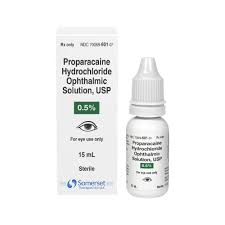
Local Anesthesia is administered directly onto the ocular surface in the form of eye drops or gel. It numbs the cornea and conjunctiva without the use of injections.
Common Drugs
- Proparacaine
- Tetracaine
- Lidocaine gel
Uses
- Cataract surgery (phacoemulsification)
- Tonometry
- Gonioscopy
- Foreign body removal
- OPD diagnostic procedures
Advantages
- No needle-related complications
- Rapid onset
- High patient acceptance
Limitations
- No akinesia
- Limited pain control for longer procedures
2. Local Infiltration Anesthesia
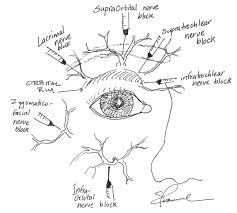
Local infiltration anesthesia involves injecting anesthetic directly into the eyelids or periocular tissues to numb a localized area.
Common Drugs
- Lidocaine
- Lidocaine with adrenaline
Uses
- Chalazion surgery
- Lid repair
- Minor oculoplastic procedures
Advantages
- Simple technique
- Effective for superficial surgeries
Disadvantages
- Tissue swelling
- Limited depth of anesthesia

3. Retrobulbar Anesthesia
Retrobulbar anesthesia is injected behind the eyeball into the muscle cone to block the optic and motor nerves.
Uses
- Major intraocular surgeries
- Vitrectomy
- Complex cataract surgery
Advantages
- Excellent anesthesia
- Complete akinesia
Complications
- Globe perforation
- Retrobulbar hemorrhage
- Optic nerve damage
⚠️ Requires skilled administration
4. Peribulbar Anesthesia
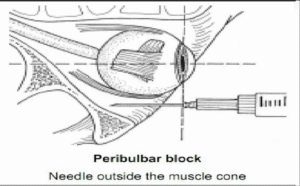
Peribulbar anesthesia is injected around the eyeball, outside the muscle cone. It provides anesthesia with a better safety profile than retrobulbar block.
Common Uses
- Cataract surgery
- Glaucoma surgery
Advantages
- Safer technique
- Reduced risk of optic nerve injury
Disadvantages
- Slower onset
- Larger volume required
5. Sub-Tenon’s Anesthesia
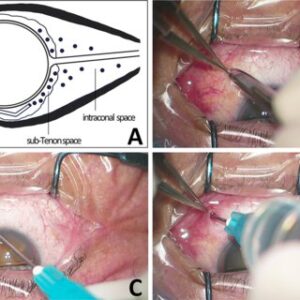
Sub-Tenon’s anesthesia is administered using a blunt cannula beneath Tenon’s capsule, avoiding sharp needles.
Uses
- Modern cataract surgery
- Vitreoretinal surgery
Advantages
- Less pain
- Minimal complications
- Good patient comfort
Disadvantages
- Chemosis
- Subconjunctival hemorrhage
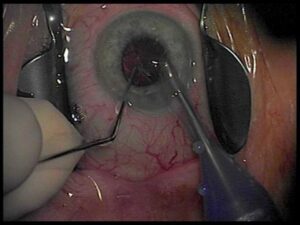
6. Intracameral Anesthesia
Intracameral anesthesia involves injecting preservative-free lidocaine into the anterior chamber of the eye.
Uses
- Cataract surgery (with topical anesthesia)
Advantages
- Enhanced intraoperative comfort
- No needle use
Limitations
- Short duration
- Not suitable alone for painful procedures
7. Sedation (Monitored Anesthesia Care)
Sedation is administered intravenously to reduce anxiety and discomfort, always combined with topical or regional anesthesia.
Common Drugs
- Midazolam
- Propofol
Benefits
- Improves patient cooperation
- Reduces stress and fear
Monitoring Required
- Pulse oximetry
- Blood pressure
- ECG (if indicated)
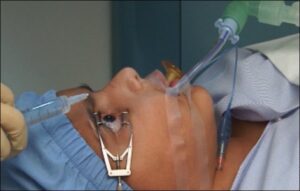
8. General Anesthesia
General anesthesia induces complete unconsciousness and is used when patient cooperation is not possible.
Indications
- Pediatric patients
- Ocular trauma
- Long and complex surgeries
- Mentally challenged patients
Advantages
- Complete pain control
- Absolute immobility
Disadvantages
- Requires OT setup
- Higher systemic risk
- Longer recovery time
A clear knowledge of ophthalmic anesthesia techniques helps OT technologists and eye care professionals assist effectively during eye surgeries while maintaining patient safety and comfort throughout the procedure.